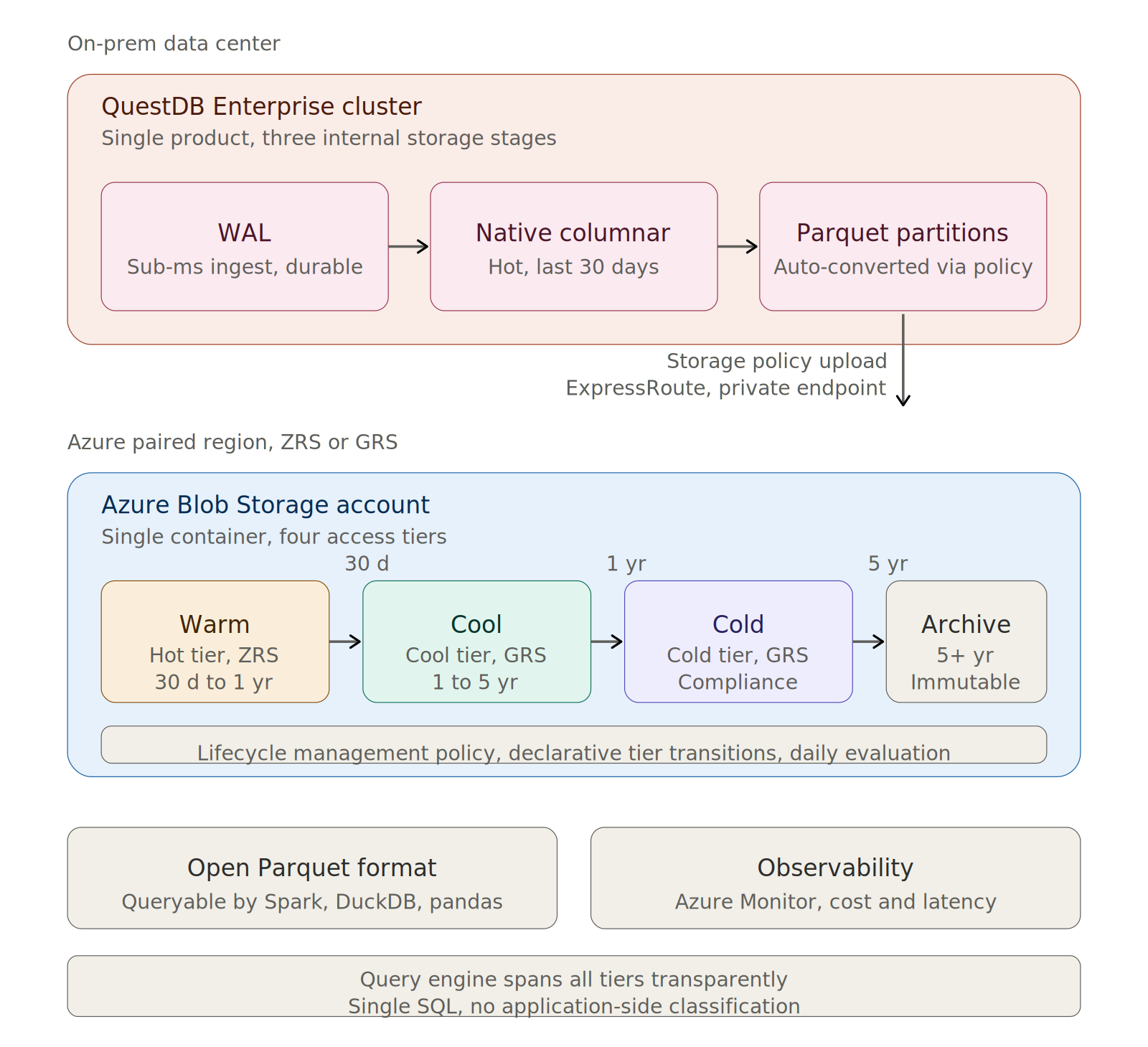
1. Tiered Storage Architecture
Three internal storage stages inside the QuestDB Enterprise cluster (WAL, native columnar, Parquet partitions) feed Azure Blob storage via storage policy uploads. Azure Blob holds warm, cool, cold, and archive tiers with declarative lifecycle management. The query engine spans all tiers transparently — applications issue a single SQL query and the engine determines which tier to read from, with no application-side classification required.
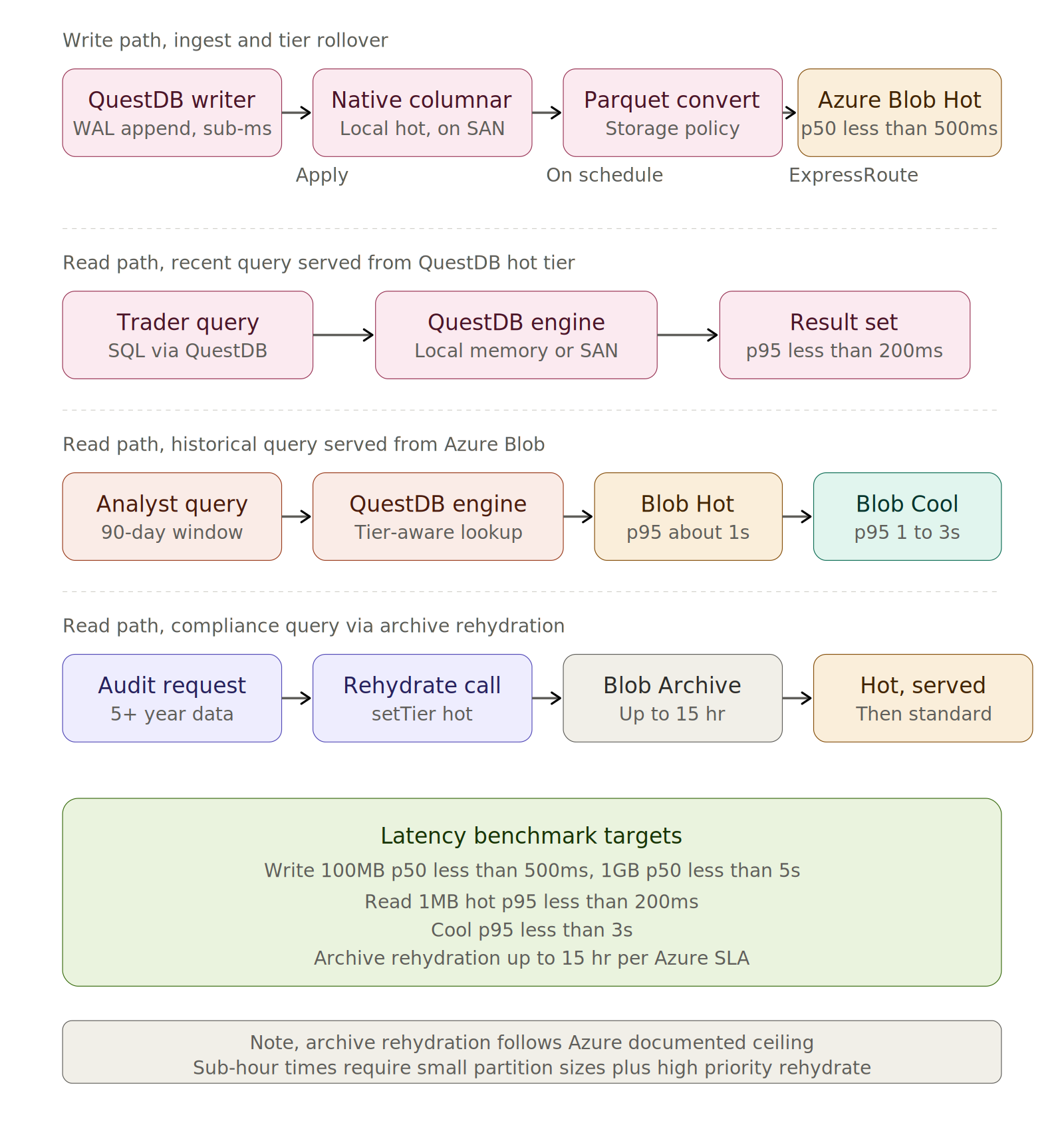
2. Write & Read Data Flow
Sequence of write and read operations between QuestDB on-prem and Azure Blob storage tiers, showing latency targets at each hop. The write path traverses four stages (WAL, native columnar, Parquet conversion, Blob upload). Read paths cover trader queries from local hot tier, analyst queries from Azure Blob Hot and Cool tiers, and compliance queries via archive rehydration with up to 15-hour latency per Azure SLA.
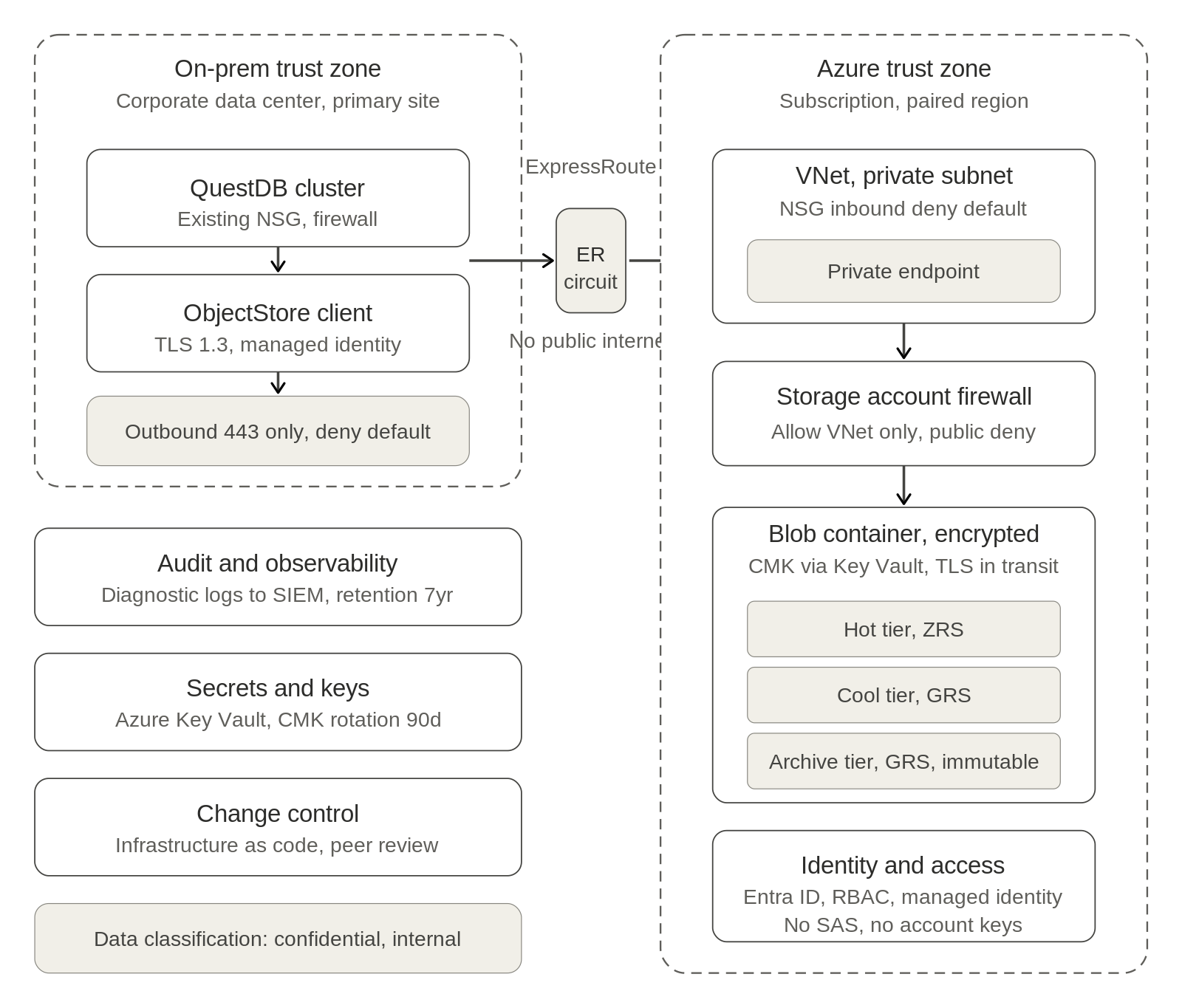
3. Network & Security Boundaries (IAC Review)
Network and trust boundary view of the QuestDB tiered storage architecture, showing on-prem zone, ExpressRoute private circuit, Azure VNet, private endpoint, storage firewall, and identity boundaries.
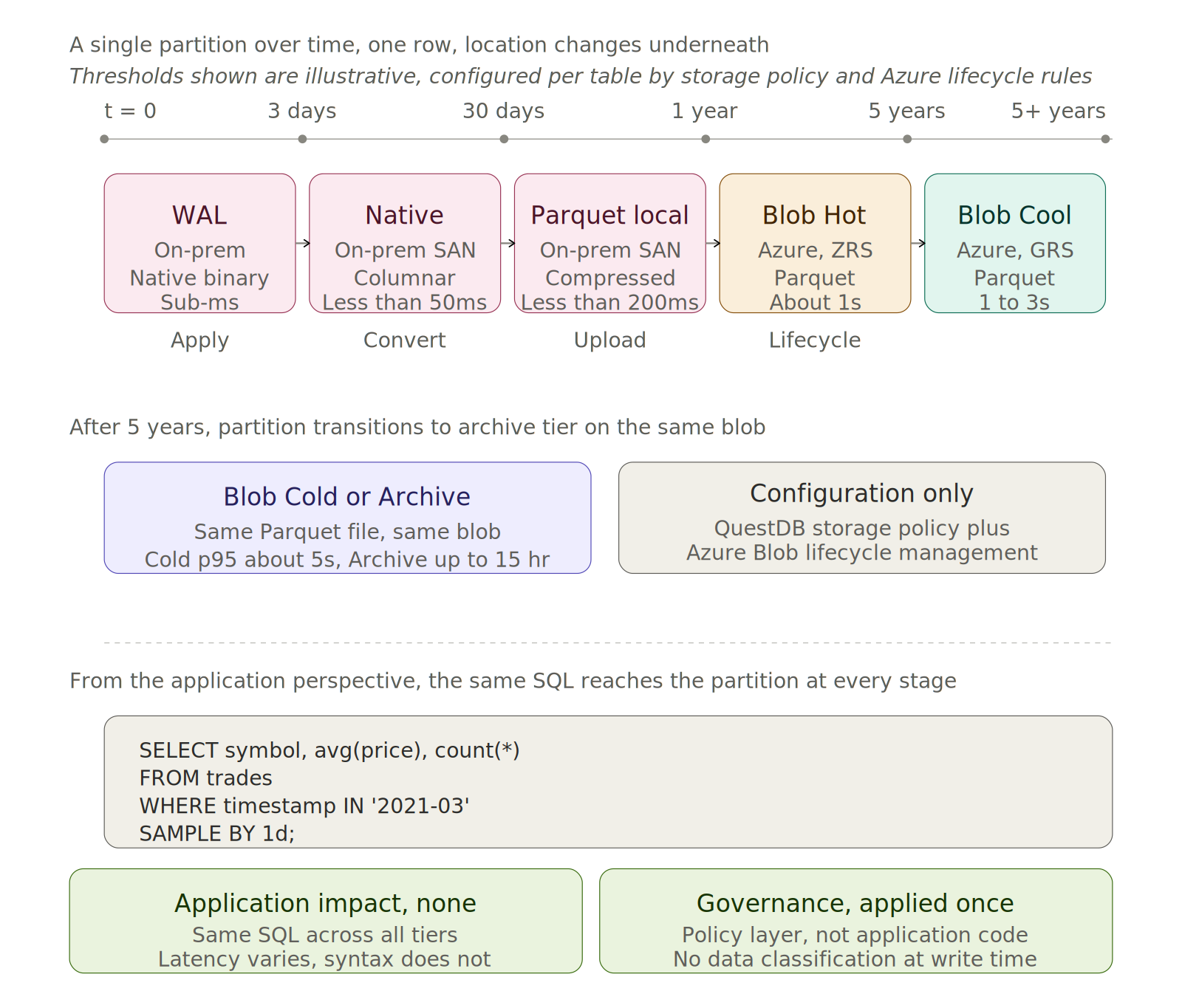
4. Partition Lifecycle — Why Developers Don't Need to Care
A single partition tracked over its multi-year lifecycle. The same Parquet file moves from on-prem WAL through native columnar, local Parquet, and the four Azure Blob tiers — all configured at the platform layer via QuestDB storage policies and Azure lifecycle rules. From the application perspective, the same SQL query reaches the partition at every stage; only latency varies. Thresholds shown are illustrative and configured per table based on data volume and access patterns.